Can Chickens Eat Rhubarb? Is It Safe?
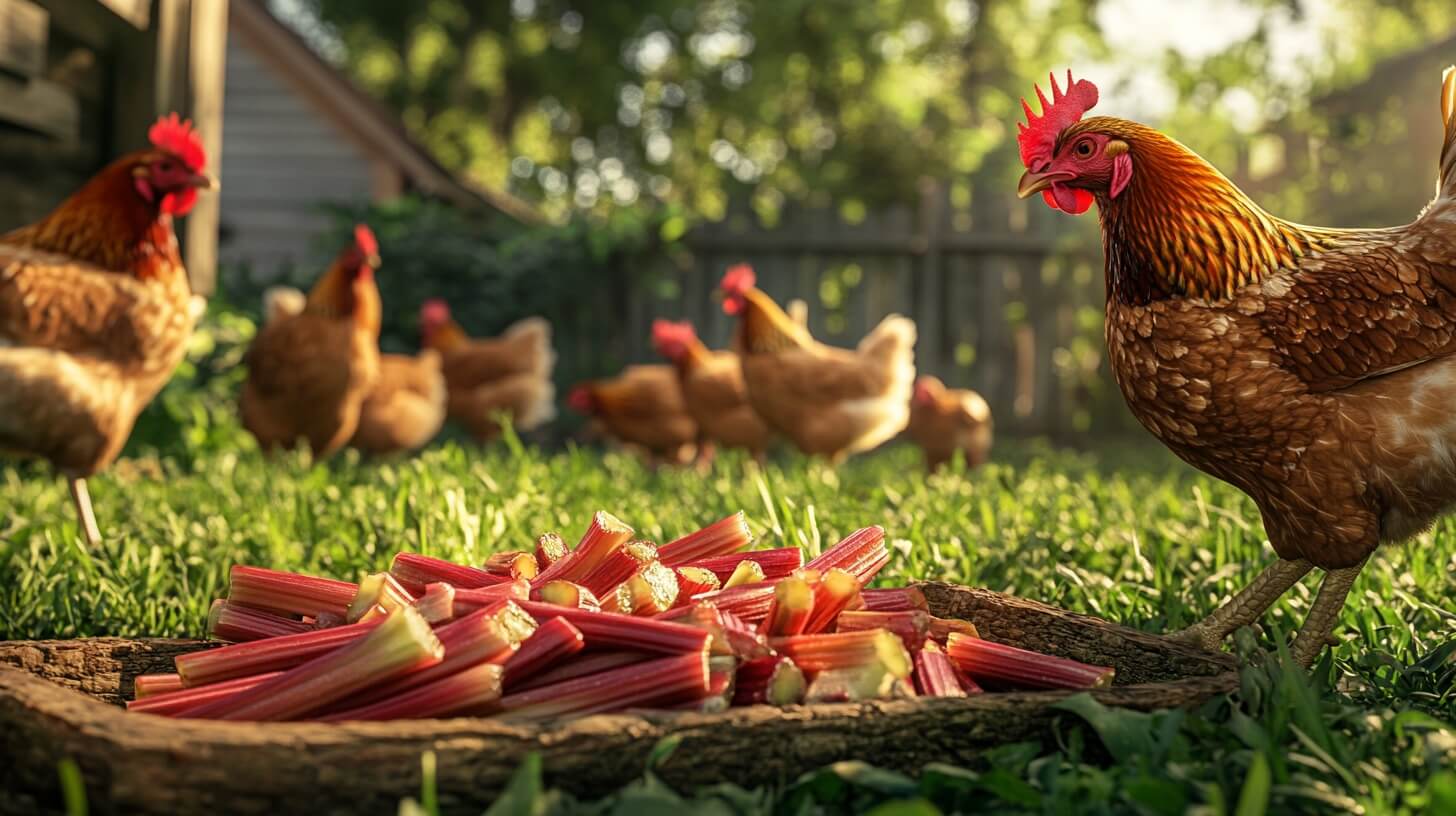
Backyard chickens are a joy to raise, and feeding them a varied diet keeps them healthy and happy. If you’re wondering, “Can chickens eat rhubarb?”, you’re in the right place.
Can Chickens Have Rhubarb?
No, chickens cannot eat rhubarb. It contains oxalic acid, which is highly toxic.
Why Rhubarb is Toxic for Chickens
Oxalic acid can cause kidney damage and digestive issues.
What Happens if a Chicken Eats Rhubarb?
- Diarrhea and vomiting.
- Kidney failure.
- Lethargy and weakness.
What to Do if a Chicken Eats Rhubarb?
- Remove rhubarb from the coop immediately.
- Provide fresh water to aid detoxification.
- Contact a veterinarian if symptoms develop.
What Foods Are Toxic to Chickens?
Several pantry items are toxic to chickens and should be avoided. These include:
- Avocado: Contains persin, which can cause respiratory distress and death.
- Chocolate: Has theobromine and caffeine, leading to heart and nervous system issues.
- Onions: Can cause hemolytic anemia by damaging red blood cells.
- Rhubarb: Contains oxalic acid, which can lead to kidney damage.
- Coffee Grounds: Caffeine can cause heart palpitations and neurological issues.
- Tea Leaves: Contain caffeine, which can disrupt heart and nervous system function, causing rapid heartbeat and tremors.
- Alcohol: Causes liver damage and neurological issues, leading to disorientation, respiratory depression, or death.
- Leeks: Contain thiosulfinates, which can damage red blood cells, leading to hemolytic anemia.
- Chives: Have thiosulfinates that harm red blood cells, potentially causing hemolytic anemia.
- Shallots: Include thiosulfinates, which can damage red blood cells and cause hemolytic anemia.
- Butter: High fat content can cause digestive issues and obesity, leading to diarrhea and lethargy.
- Milk: Contains lactose, which chickens cannot digest, causing diarrhea and abdominal discomfort.
- Ice Cream: Dairy and sugar content can lead to digestive issues and obesity, causing diarrhea and weight gain.
- Sugar: Offers no nutritional value and can cause obesity and digestive imbalances, leading to weight gain and reduced egg production.
- Salt: Excessive salt can cause salt poisoning and kidney damage, resulting in excessive thirst and neurological issues.
Always research before feeding new foods to your flock.
Conclusion
Rhubarb is not safe for chickens, so please do not feed it to your chickens. If you do accidentally feed it to your chickens, monitor the flock for symptoms, and if they develop, seek advice from a veterinarian who specializes in poultry.
The gear we reach for again and again lives in our shop, along with everything else worth buying twice.
View our picks in Flock Supplies →