Can Chickens Eat Brussels Sprouts? Are They Safe?
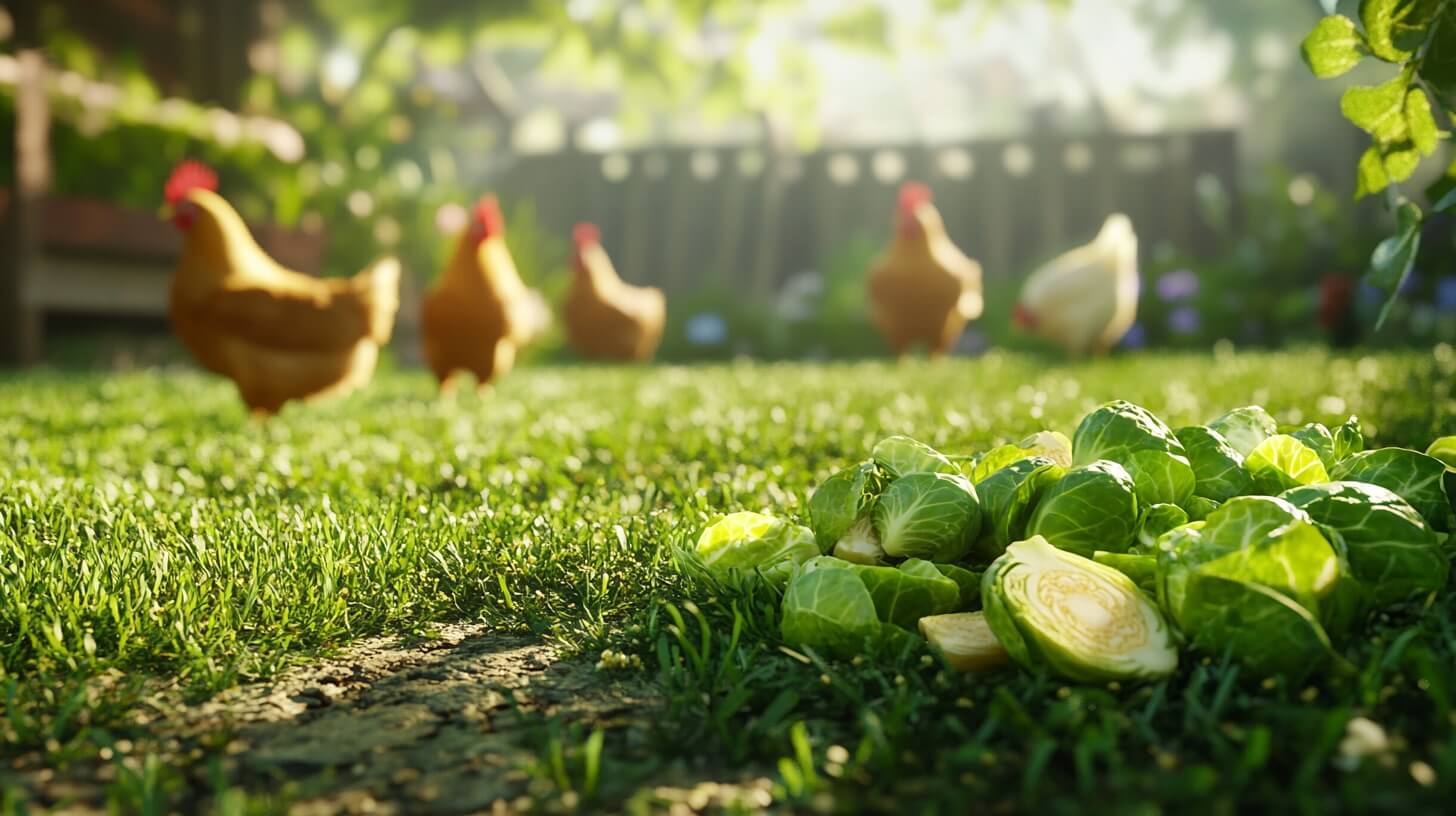
Backyard chickens are a joy to raise, and feeding them a varied diet keeps them healthy and happy. If you’re wondering, “Can chickens eat Brussels sprouts?”, you’re in the right place. This article explores whether Brussels sprouts are safe for chickens, their benefits, and how to feed it to your chickens.
Can Chickens Have Brussels Sprouts?
Yes, chickens can eat Brussels sprouts. They should be fed in moderation due to goitrogens.
Health Benefits of Brussels Sprouts for Chickens
Vitamins
- Rich in vitamins C and K.
- Contains fiber for digestion.
Brussels Sprouts can be a refreshing treat, especially during summer, but always ensure your chickens have plenty of fresh water to stay hydrated.
How to Feed Brussels Sprouts to Chickens
- Chop sprouts finely.
- Offer steamed or raw.
Always introduce Brussels sprouts gradually to avoid digestive upset, and balance them with a complete poultry feed for optimal nutrition. And remember that Brussels sprouts should only be fed in moderation.
Can Chickens Eat Moldy Brussels Sprouts?
No, chickens should never eat anything moldy. Mold can produce mycotoxins, which are harmful to chickens and can cause illness or even death. Always inspect what you’re giving to your chickens before feeding, and discard anything that shows signs of mold, rot, or spoilage.
What Foods Are Toxic to Chickens?
Several pantry items are toxic to chickens and should be avoided. These include:
- Avocado: Contains persin, which can cause respiratory distress and death.
- Chocolate: Has theobromine and caffeine, leading to heart and nervous system issues.
- Onions: Can cause hemolytic anemia by damaging red blood cells.
- Rhubarb: Contains oxalic acid, which can lead to kidney damage.
- Coffee Grounds: Caffeine can cause heart palpitations and neurological issues.
- Tea Leaves: Contain caffeine, which can disrupt heart and nervous system function, causing rapid heartbeat and tremors.
- Alcohol: Causes liver damage and neurological issues, leading to disorientation, respiratory depression, or death.
- Leeks: Contain thiosulfinates, which can damage red blood cells, leading to hemolytic anemia.
- Chives: Have thiosulfinates that harm red blood cells, potentially causing hemolytic anemia.
- Shallots: Include thiosulfinates, which can damage red blood cells and cause hemolytic anemia.
- Butter: High fat content can cause digestive issues and obesity, leading to diarrhea and lethargy.
- Milk: Contains lactose, which chickens cannot digest, causing diarrhea and abdominal discomfort.
- Ice Cream: Dairy and sugar content can lead to digestive issues and obesity, causing diarrhea and weight gain.
- Sugar: Offers no nutritional value and can cause obesity and digestive imbalances, leading to weight gain and reduced egg production.
- Salt: Excessive salt can cause salt poisoning and kidney damage, resulting in excessive thirst and neurological issues.
Always research before feeding new foods to your flock.
Conclusion
Brussels Sprouts can be a great addition to your chickens’ diet when fed correctly, offering nutritional benefits. By following our feeding tips and ensuring Brussels sprouts are fresh and properly prepared, you can keep your flock healthy and happy.
The gear we reach for again and again lives in our shop, along with everything else worth buying twice.
View our picks in Flock Supplies →